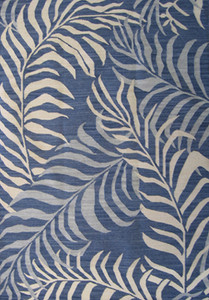
A Hawaiian weaver can turn a single coconut frond, or lau niu, into something else. Thatching for a coastal shelter. A basket. A fan. Nothing about the coconut tree went to waste, because every part of it kept island life going.
Its many uses make the frond a fitting image of resourcefulness and shelter. In this design, overlapping fronds form a canopy that suggests resilience and shared abundance.
Coastal groves inspired this design, a welcoming canvas that honors ancestral ingenuity and the way the islands shelter their people.
Run your hand across a dhurrie, and you won’t find a pile or knots. Just thread crossing thread on the loom, until a pattern appears in the weave itself.
It’s a style of weaving with deep roots in India, and here it speaks Hawaiian. Hibiscus and Maui Leaves. Palm Leaf – Coconut Fronds, Breadfruit, and Bamboo. Fish & Turtle and Coral Sea for those who love the water. Chenille Border carries a soft, velvety touch, and Plain lets the room do the talking.
Low-profile and around a quarter of an inch thick in several styles, these rugs work well under dining tables and suit hallways, bedrooms, and other spaces where a thick rug would be in the way.
Indich Collection Exclusive - HAND WOVEN DHURRIE RUGS. Flatwoven (no pile), durable, reversible, easy to clean, 1/4" thick.
Item #: PALM LEAF (Black/Brown (94462))